


E-file IRS Form 5227 for
Split-Interest Trusts
If your tax-exempt organization serves as trustee of a split-interest trust, IRS Form 5227 is due every April 15. Tax990 is an IRS-authorized e-file provider to file 5227 online. No CPA required, with guided filing instructions and a real support team.

IRS-Authorized
Trusted software with 99.3% IRS acceptance rate.

Backed by The Tax990 Commitment
Error checks, no-cost amendments & retransmissions

AICPA SOC Certified
Your data is protected with SOC-certified security.
WHO NEEDS TO FILE
Find out if Form 5227 applies to your trust
Form 5227 is required for any nonprofit serving as trustee of a split-interest trust — a
trust with
at least one nonprofit beneficiary and at least one private beneficiary. There are four types.
CRAT
Charitable remainder annuity trust
One-time contribution at the start. Fixed annual dollar amount paid to a private beneficiary. Tax-exempt organization receives the remainder at end of
trust term.
CRUT
Charitable remainder unitrust
Annual payout is a fixed percentage of the trust's fair market value. Multiple contributions allowed over the trust term. Three subtypes based on payout structure.
CLT
Charitable lead trust
Payments during the trust term go to the tax-exempt organization. The remainder goes to the private beneficiary at the end of term. Can have fixed or percentage payouts.
PIF
Pooled income fund
Multiple donors contribute and receive units based on fair market value. Upon termination of a donor's interest, the nonprofit takes over their share.
WHY YOU NEED TO FILE
Your trust's compliance depends on accurate,
timely 5227 filing.
IRS Form 5227 reports the trust's income, deductions, distributions to beneficiaries, and
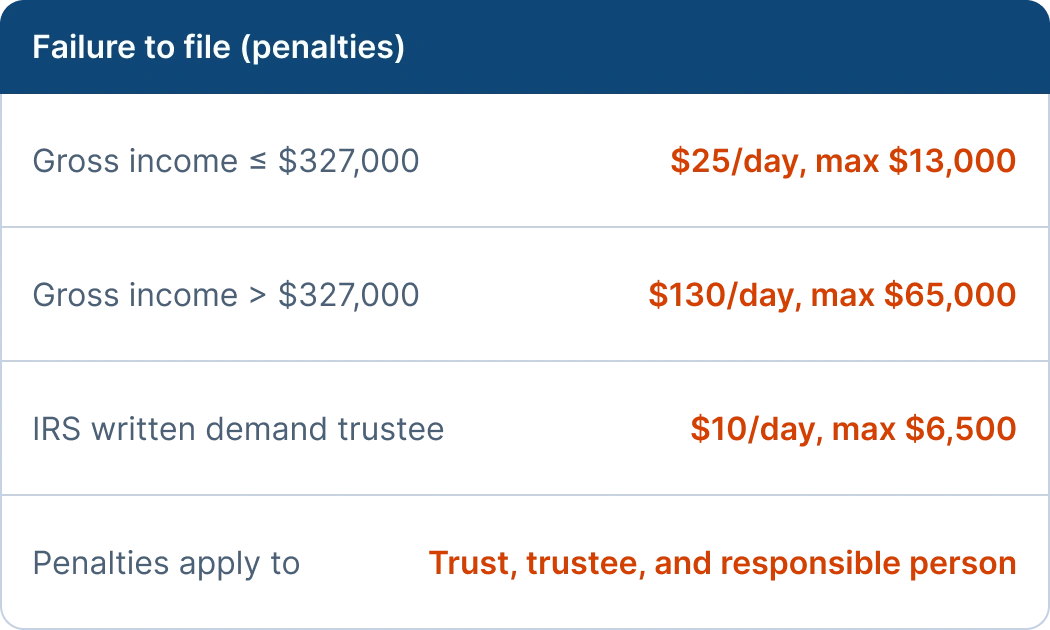
compliance status to the IRS. Missing or incorrect filings carry significant penalties.
Required annually
All split-interest trusts must file every year, even in years with no distributions. The trustee can efile 5227 instead of filing on paper.
Due April 15 for all filers
Unlike the 990 series, the due date to file Form 5227 is April 15 regardless of your fiscal year. A six-month extension is available via Form 8868.
IRS secrutiny is high
Split-interest trusts carry tax benefits for private beneficiaries. The IRS pays close attention to accuracy, especially on the balance sheet to efile 5227.
HOW IT WORKS
Filing Form 5227 has never been this simple
Three steps. Guided instructions. No CPA required. Tax990 handles the complexity
so you can focus on what matters.

Add your trust
Enter the EIN and other required information to add your trust. You can access the trust anytime from the address book.
Complete the return
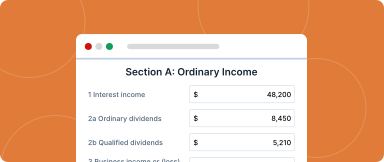
Step-by-step guidance to efile Form 5227. The system helps you through income and deductions, distributions to beneficiaries, balance sheet, and compliance questions.
Review & Transmit
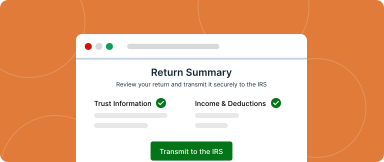
Built-in error checks validate your return against IRS 5227 instructions. Give it a final review and submit directly to the IRS.
One platform for your 990 and your 5227
A full suite of features built to save you time.
IRS-authorized
Tax990 is one of a small number of platforms authorized by the IRS to e-file Form 5227 for nonprofit trustees.
Simple filing process
Prepare and e-file your 5227 with ease and accuracy. We’ll guide you through step by step.
Built-in error checks
Every return is validated against IRS business rules before you submit. Errors get caught here, before reaching the IRS.
Team collaboration
Invite your team members, assign them roles, and delegate filings.
Real support
Get instant help from our US-based support team via chat, phone, or email.
Deadline reminders
Never miss April 15. Tax990 sends timely reminders so your trust stays in good standing year after year.
Beyond Filing
Support that lasts beyond 5227 filing
So your mission stays the focus.

The Tax990 Commitment
At Tax990, we’ll do whatever it takes to help you get your form approved.
Every 5227 return you file includes:
-
 Complimentary extension if you need more time
-
 No-cost amendments if anything needs to be updated
-
 Free retransmission if the IRS rejects your return
-
 Money-back guarantee so you can file with confidence
TRANSPARENT PRICING
Everything You Need to Confidently File
Form 5227 Online
FORM 5227
One flat fee. Pricing includes live expert phone,
& chat. No hidden fees or subscriptions.
Pay only when you transmit

- Complimentary extension (Form 8868)
- No-cost corrections
- Free retransmission of rejected returns
- Money-back guarantee
- Team collaboration — unlimited users, no extra fees
FAQs
Frequently asked questions
All split-interest trusts must file Form 5227 annually. The trustee is responsible for filing, which is typically the tax-exempt organization managing the trust. The trust has its own EIN and files its own Form 5227 separate from the Tax-exempt organization's 990 filing requirement.
Form 5227 is due April 15 for all filers, regardless of fiscal year. A six-month extension to October 15 is available by filing Form 8868 by the original due date.
No. The trust is a separate legal entity from the tax-exempt organization, with its own EIN and its own filing requirement. The tax-exempt organization files its own 990 series return, and, if the tax-exempt organization is a trustee, also files Form 5227 separately. Tax990 helps with both.
Form 5227 reports the trust's income and deductions, distributions to beneficiaries, compliance with private foundation rules, donor information, and certain payout tracking information depending on the trust type.
Yes. File Form 8868 by April 15 to receive an automatic six-month extension, moving the due date to October 15. Tax990 supports Form 8868 filing
as well.
Not with Tax990. The platform is built for tax-exempt organization finance officers and trustees to file directly — with step-by-step guidance, built-in error checks, and a real support team available the whole time. Many organizations choose Tax990 specifically to handle this themselves rather than paying a CPA to file it.
Yes. Attorneys and lawyers who serve as trustees may be responsible for preparing and transmitting IRS Form 5227 for the split-interest trust they manage. Tax990 provides a platform for professional trustees to review the required information, complete the return, and efile 5227 directly with
the IRS.
CPAs and investment management professionals serving as trustees can use Tax990 to prepare and file IRS Form 5227 for eligible split-interest trusts. The platform provides guided filing, built-in error checks, and electronic transmission to help trustees efile 5227 accurately and on time.
Ready to e-file your Form 5227?
IRS-authorized. Guided instructions. No CPA required.
Start for free. Pay only when you submit.